








Patient Resources

LUCEMYRA Educational Brochure

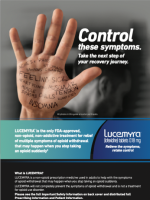
This downloadable brochure provides useful information on how LUCEMYRA can help you get through opioid withdrawal. It shows how and why opioid withdrawal occurs and offers an overview of LUCEMYRA and the LUminate Support Program.

Additional Resources

BioCorRx Pharmaceuticals Inc. is not responsible for the content on external websites.
SAMHSA National Help Line
  • 24/7, 365-day-a-year helpline (1-800-662-HELP [4357]) providing free and confidential treatment referral and information about mental and/or substance use disorders
SAMHSA Medication-Assisted Treatment for Substance Use Disorders-Opioid Treatment Program Directory
  • State-by-state access to information about treatment programs
SAMHSA Treatment Center Locator
  • Find treatment facilities providing a variety of services using the SAMHSA mapping tool
National Institute on Drug Abuse
  • The National Institute on Drug Abuse (NIDA) is a federal scientific research institute and the world’s largest funder of biomedical research on drug use and addiction. Stay up-to-date on new clinical trials, research, and development
Narcotics Anonymous (NA)
  • Nonprofit organization and support for recovering addicts. Provides literature and support, ways to contribute, and locations or weekly recovery meetings
National Alliance on Mental Illness (NAMI)
  • Provides advocacy, education, support, and public awareness so that all individuals and families affected by mental illness can build better lives
National Council on Alcoholism and Drug Dependence (NCADD)
  • 24-hour information and support for people suffering with substance use disorder and their families, to better understand addiction, seek help, and find treatment programs and support groups. Hope Line: 1-800-622-2255
U.S. Department of Health and Human Resources
  • Provides important information about the opioid epidemic, U.S. government efforts to address the crisis, a national helpline, and a treatment locator
Centers for Disease Control Prevention
  • Provides important information for both patients and providers about the opioid epidemic in the U.S.

GET STARTED NOW

FIND A PROVIDER

Use our interactive map to find a healthcare provider who can discuss treatment for opioid withdrawal symptoms with LUCEMYRA.

Click to see full Important Safety Information & Prescribing Information

Expand

What is LUCEMYRA?

LUCEMYRA is a non-opioid prescription medicine used in adults to help with the symptoms of opioid withdrawal that may happen when you stop taking an opioid suddenly. LUCEMYRA will not completely prevent the symptoms of opioid withdrawal and is not a treatment for opioid use disorder.

Important Safety Information

LUCEMYRA can cause serious side effects, including low blood pressure, slow heart rate, and fainting. Watch for symptoms of low blood pressure or heart rate, including dizziness, lightheadedness, or feeling faint at rest or when quickly standing up; if you experience these symptoms, call your healthcare provider right away and do not take your next dose of LUCEMYRA until you have talked to your healthcare provider. Avoid becoming dehydrated or overheated and be careful not to stand up too suddenly from lying or sitting, as these may increase your risk of low blood pressure and fainting. When your treatment is complete, you will need to stop taking LUCEMYRA gradually, or your blood pressure could increase. After a period of not using opioid drugs, you can become more sensitive to the effects of opioids if you start using them again. This may increase your risk of overdose and death. Before taking LUCEMYRA, tell your healthcare provider about all your medical conditions, including if you have low blood pressure, slow heart rate, any heart problems including history of heart attack or a condition called long QT syndrome, liver or kidney problems, or if you drink alcohol. Tell your healthcare provider if you are pregnant, plan on becoming pregnant, or are breastfeeding; it is not known if LUCEMYRA can harm your unborn baby or whether LUCEMYRA passes into your breast milk. Especially tell your healthcare provider if you take benzodiazepines, barbiturates, tranquilizers, or sleeping pills, as taking these with LUCEMYRA can cause serious side effects. The most common side effects of LUCEMYRA include low blood pressure or symptoms of low blood pressure such as lightheadedness, slow heart rate, dizziness, sleepiness, and dry mouth. To report SUSPECTED ADVERSE REACTIONS or product complaints, contact BioCorRx Pharmaceuticals Inc at 1-833-LUCEMYRA. You may also report SUSPECTED ADVERSE REACTIONS to the FDA at 1-800-FDA-1088 or www.fda.gov/medwatch.

Click here to see full Prescribing Information.

Get Visible Online With AI Technology

Frequently Asked Questions...

Ask your Questions to AI Assistant